Atlanta proposes stronger blight tax law, increasing penalties on neglected properties up to 25 times, aiming to revitalize neighborhoods and hold absentee property owners accountable.
By Milton Kirby | Atlanta, GA | April 30, 2026
The administration of Andre Dickens has introduced new legislation aimed at strengthening Atlanta’s fight against blighted properties, expanding enforcement tools and increasing pressure on negligent property owners across the city.
The proposed legislation, sponsored by Atlanta City Councilmember Byron D. Amos, builds on the city’s existing “blight tax,” formally known as the community redevelopment ad valorem tax. The measure is part of the mayor’s broader Neighborhood Revitalization Initiative, which seeks to reverse long-standing disinvestment in Atlanta communities.
Under current law, properties deemed blighted—based on criteria outlined in O.C.G.A. 22-1-1—can face steep financial penalties. The updated legislation strengthens that framework, allowing the city to more aggressively apply a tax increase of up to 25 times the standard rate on qualifying vacant properties.
“Neglected properties drain the vitality from our neighborhoods,” Dickens said in a statement. “This legislation sends a clear message: if you own property in Atlanta, you have a responsibility to maintain it.”
City leaders say blighted properties often trigger a ripple effect in surrounding communities, lowering home values, attracting crime, and increasing strain on public services. The enhanced legislation aims to interrupt that cycle by accelerating enforcement and expanding accountability.
Amos emphasized the urgency of the issue, noting that many residents have endured deteriorating properties for years. “Let this legislation be a message to delinquent property owners throughout the City that their behavior will no longer be tolerated,” he said.
The strengthened blight tax is one of several legal tools available to the city. Officials say it will be used alongside judicial in rem actions, nuisance prosecutions, condemnation authority, and traditional code enforcement measures.
Raines Carter, who serves as the city’s designated Public Officer for blight enforcement, said the city plans to focus on the most severe cases. Once a property is officially designated as blighted, owners are given a limited window to correct violations before the increased tax penalty takes effect.
“The City will strategically deploy the blight tax and all other remedies available to hold delinquent property owners responsible,” Carter said, urging residents to report problem properties through Atlanta’s 311 system.
The legislation follows the Atlanta City Council’s 2024 passage of Ordinance 24-O-1370, which authorized the initial use of the blight tax and set the groundwork for implementation. Since then, multiple city departments have coordinated to develop enforcement procedures and identify eligible properties.
City officials say they will monitor the program’s outcomes during its first year, with plans to refine and potentially expand enforcement to additional neighborhoods. The move signals a more aggressive posture by Atlanta leaders in addressing blight—one that combines financial penalties with legal enforcement in an effort to stabilize communities and restore long-neglected areas.
Support open, independent journalism—your contribution helps us tell the stories that matter most.
Atlanta proposes a Downtown Enterprise Zone to capture World Cup revenue, funding affordable housing and small businesses while accelerating long-term revitalization efforts in the city’s core.
By Milton Kirby | Atlanta, GA | April 23, 2026
Mayor Andre Dickens has introduced legislation to establish a new Downtown Enterprise Zone, a move city leaders say will channel the economic surge expected from the FIFA World Cup 2026 into long-term investment for housing, small businesses, and neighborhood revitalization.
The proposed zone, part of the mayor’s broader Neighborhood Reinvestment Initiative, is designed to transform a key section of Downtown Atlanta into a reinvestment engine—capturing revenue generated during major global events and redirecting it into community development.
“As part of our Administration’s unwavering commitment to changing generational outcomes for Atlantans, we are using every tool at our disposal to bring investment to high opportunity areas like Downtown,” Dickens said in the announcement. “The new Downtown Enterprise Zone will strategically harness the revenue and momentum of the World Cup events to create investment for new affordable housing and small businesses.”
Targeted Area, Strategic Timing
The Enterprise Zone would cover nearly 30 acres of Downtown, bounded roughly by Marietta Street NW, Peachtree Street SW, Trinity Avenue SW, and Ted Turner Drive/Forsyth Street SW. The designation is being coordinated with the Georgia Department of Community Affairs, which oversees such economic development zones.
City officials say the timing is intentional. With Atlanta set to host matches during the 2026 World Cup, leaders are looking to ensure that the influx of visitors and spending produces benefits that extend beyond the event itself.
Under the proposal, the city could capture up to 5% of gross sales from qualifying businesses within the zone. Those funds would then be reinvested into local projects, including affordable housing initiatives and support for small, locally owned businesses.
A Piece of a Larger Strategy
Atlanta City Councilmember Jason Dozier, whose district includes Downtown, emphasized that the Enterprise Zone is one part of a broader redevelopment effort.
“The timing of this legislation is no accident,” Dozier said. “No single policy is a panacea, and this initiative is one part of a broader, coordinated effort to help Downtown Atlanta live up to its fullest potential as a neighborhood, as a community and as a destination.”
Dozier added that the goal is to convert short-term economic activity into “lasting benefits and sustained momentum” for both residents and businesses.
Private Investment Already Underway
The success of the Enterprise Zone will depend heavily on the number of participating businesses and their economic activity. Increasing the number of viable businesses in the district is seen as critical.
That effort is already underway in parts of Downtown, particularly in South Downtown (SoDo), where David Cummings and his firm Atlanta Ventures are leading a large-scale redevelopment.
Cummings’ company controls a 58-building portfolio of historic mixed-use properties and is focused on attracting small, local retailers. Five businesses have already opened, with 11 more expected by June 2026—including a new location of El Tesoro.
“This Enterprise Zone ensures that as the district grows, we are simultaneously investing in the affordable housing and small businesses needed to support that growth,” Cummings said.
Why This Matters
The proposed Enterprise Zone reflects a growing trend among cities hosting global events: using short-term tourism spikes as catalysts for long-term urban investment. For Atlanta, the stakes are particularly high as leaders seek to reshape Downtown into a more livable, economically inclusive neighborhood.
If approved, the legislation could create a model for how major events like the World Cup can be leveraged not just for visibility, but for sustained economic impact—especially in areas that have long struggled to balance development with affordability.
MARTA riders must switch to the new Better Breeze fare system by May 2, 2026, as old Breeze cards and apps are phased out.
By Milton Kirby | Atlanta, GA | April 22, 2026
Riders across metro Atlanta’s transit network are approaching a firm deadline to transition to a new fare payment system, as Metropolitan Atlanta Rapid Transit Authority officials confirm that all customers must convert to the “Better Breeze” system by May 2, 2026.
The upgrade affects not only MARTA riders but also customers using regional transit partners, including ATL Xpress, CobbLinc, Connect Douglas, and Ride Gwinnett.
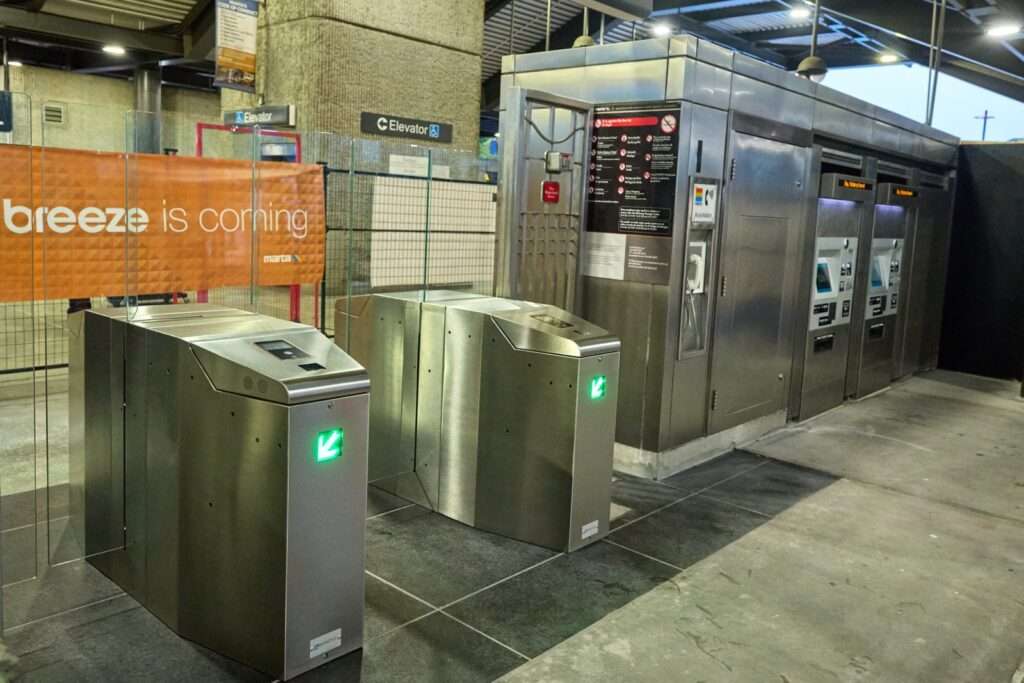
Transit officials say the new system is already live, with installation of updated fare equipment ongoing. For now, station gates remain open during the transition period—but that grace window will close May 2, when new faregates activate and payment will be required to ride.
What Riders Need to Know
Under the Better Breeze system, riders must use one of the following payment methods:
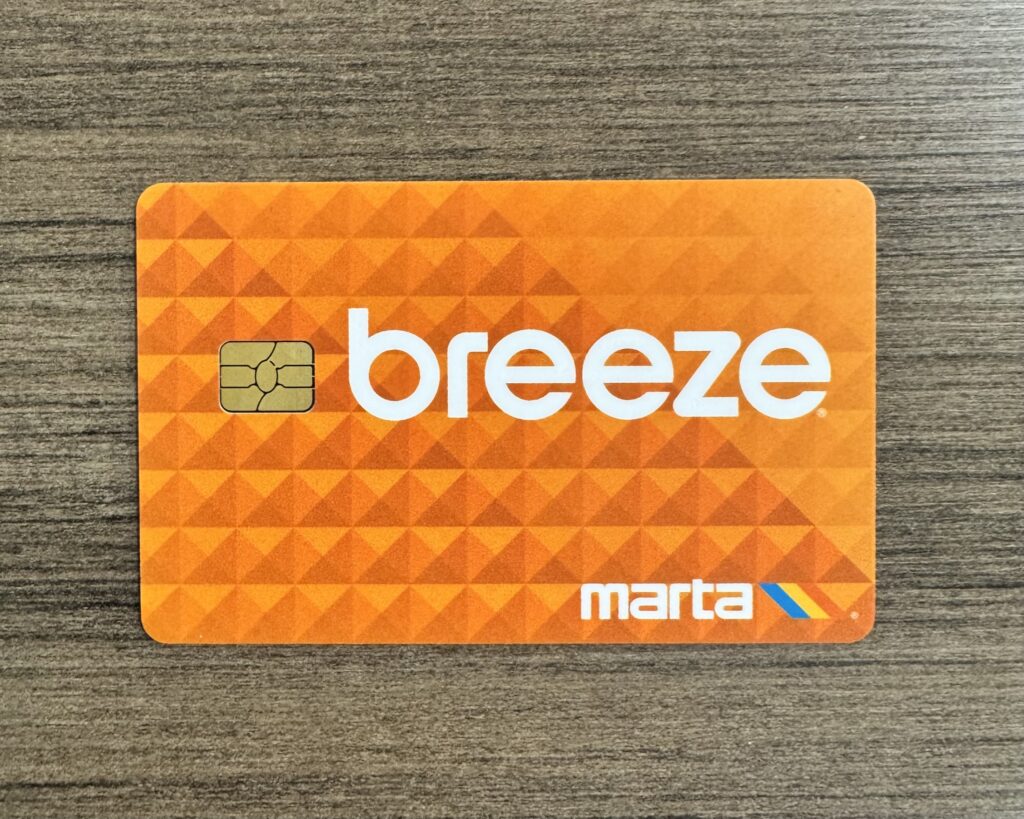
Better Breeze Card – Courtesy MARTA
A new orange Breeze card
A major bank card
A mobile wallet
New Breeze cards are available at ticket vending machines in select stations, MARTA Ride Stores, and online through Breezecard.com. Riders who qualify for reduced fares or mobility programs will automatically receive new cards by mail, while institutional cards are being distributed through employers, schools, and partner organizations.
Cash will still be accepted on local bus routes—with important limitations. Riders must provide exact change, will receive no transfers, and cannot load cash onto Breeze cards while on the bus. Cash is also not accepted onboard the Rapid A-Line.
What Will No Longer Work
Beginning May 2, several familiar options will be phased out:
Old Breeze cards
Breeze Mobile 2.0 app
The new BreezeMobile app for fare payment (it is currently for account management only)
Officials emphasize that while the new app exists, riders must still use a physical card or bank/mobile payment for now.
What Happens to Existing Balances
MARTA is assuring customers that unused balances will not be lost. Riders who register their new Breeze accounts will be able to transfer funds from old accounts between May 5 and October 30, 2026.
What’s Coming Next
The agency says additional improvements are on the way, including:
Virtual Breeze cards stored in mobile wallets
Retail availability of Breeze cards
New onboard cash fareboxes
Why It Matters
The Better Breeze rollout represents one of the most significant fare system upgrades in MARTA’s history, aligning Atlanta with other major transit systems that have shifted toward contactless payments.
But the transition also raises practical concerns—especially for riders who rely on cash or may not yet have access to updated cards. With the May 2 deadline approaching, transit officials are urging riders to act now to avoid disruptions.
Customers can find more information, including instructional videos in English and Spanish, through MARTA’s website, social media channels, or customer service line.
Grambling State University names Fawn Weaver as Spring 2026 commencement speaker, highlighting entrepreneurship, leadership, and the achievements of graduates across diverse academic programs.
By Milton Kirby | Grambling, LA | April 22, 2026
Grambling State University has announced that entrepreneur, author, and business leader Fawn Weaver will deliver the keynote address at its Spring 2026 Commencement Exercises.
The ceremony is scheduled for Friday, May 15, 2026, at 10:00 a.m. CST inside the Fredrick C. Hobdy Assembly Center, where graduates from across the university’s academic programs will gather to mark the culmination of their studies.
University President Martin Lemelle Jr. called commencement a defining moment for students and families, emphasizing both achievement and future promise.
“Commencement is a proud moment for Grambling State University—an opportunity to celebrate the academic achievement, resilience, and promise of our graduates,” Lemelle said. “We are honored to welcome Ms. Weaver, whose leadership, entrepreneurship, and commitment to purpose reflect the excellence we seek to cultivate in every Grambling State graduate.”
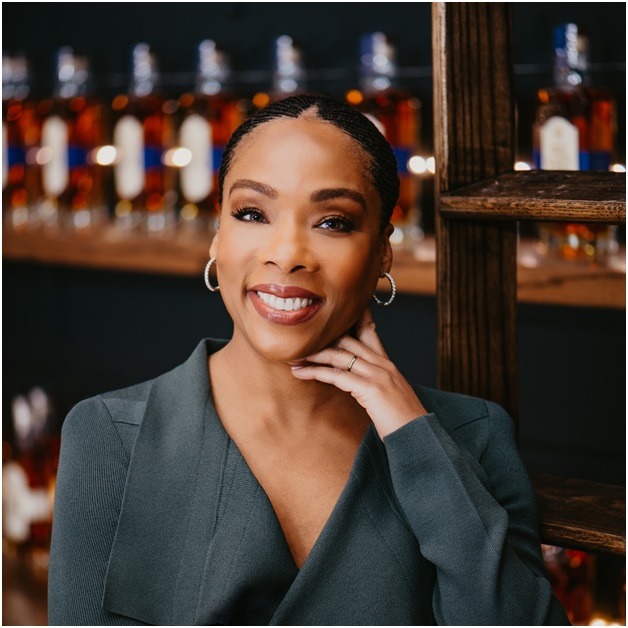
Weaver, founder and CEO of Uncle Nearest Inc., leads one of the fastest-growing independent whiskey brands in the country. Through her work, she has also elevated the legacy of Nathan Green, widely recognized as the first known African American master distiller.
Beyond her role in the spirits industry, Weaver is a two-time New York Times best-selling author, a popular TED speaker, and a seasoned entrepreneur with more than 25 years of experience building brands. Her credentials include certification as a Corporate Director from Harvard Business School, a summa cum laude degree from the University of Alabama, and an honorary Doctorate of Humanities from Bluefield State University. She is also currently pursuing a Master of Finance at Harvard Business School.
Her selection as commencement speaker places a nationally recognized business voice before graduates at one of the nation’s most storied historically Black colleges and universities, reinforcing the institution’s focus on leadership, innovation, and purpose-driven careers.
A Celebration of Academic Excellence
The Spring 2026 graduating class will include students earning degrees across multiple disciplines:
Graduate programs will confer doctoral and master’s degrees in fields ranging from education and public administration to criminal justice, nursing, and social work.
Undergraduate degrees will span the College of Arts and Sciences, including biology, computer science, cybersecurity, mathematics, and political science, alongside programs in music, theatre, and English.
The Thomas and Joyce Moorehead College of Business and Entrepreneurship will award degrees in accounting, management, marketing, economics, and information systems, while the College of Education and College of Professional Studies will recognize graduates in teaching, kinesiology, mass communications, psychology, and related fields.
University officials say the ceremony will reflect not only academic achievement, but also perseverance—an especially meaningful theme for a graduating class shaped by rapid change in higher education and the broader economy.
Additional information about the Spring 2026 Commencement Exercises is available through the university’s official website.
Before Georgia’s gubernatorial forum, limited campaign access raises deeper questions about civic inclusion, political responsiveness, and whether all voices—not just the loudest—are heard.
By Milton Kirby | Decatur, GA | April 20, 2026
In a crowded election cycle, campaigns move fast, rhetoric moves faster, and the public is left to sort out which voices matter in the noise. Yet beneath the stump speeches and policy one‑pagers lies a quieter truth about how power circulates in Georgia politics: not every voice gets the same doorway in.
The Truth Seekers Journal reached out to multiple Democratic gubernatorial campaigns on March 30, 2026, requesting interviews ahead of Thursday’s candidates forum. Several campaigns acknowledged the requests and offered courteous replies. Few moved beyond that initial exchange. One campaign engaged with follow‑up questions but did not provide a confirmed interview date. (This piece focuses on the Democratic field because those were the campaigns contacted for pre‑forum interviews.)
Community‑based outlets, small publications, and rural storytellers often find themselves waiting at the edges of the conversation—not because their questions lack substance, but because their platforms lack volume. In the days leading up to the forum, that imbalance revealed itself in familiar ways: delayed replies, incomplete follow‑through, and the quiet silence that settles in when campaigns prioritize the largest microphones first.
A Familiar Pattern Before the Forum
In the days leading up to the event, a pattern emerged, subtle, but consistent. Campaigns were responsive, but not fully accessible. Communication was polite, but rarely actionable. Threads opened, then thinned.
For community‑based outlets, this rhythm is not new. It reflects the soft architecture of political communication in a state where visibility often determines access, and access often determines influence.
Why This Matters for Georgia Voters
For Georgia voter, especially those in rural counties, small towns, and communities historically overlooked by statewide power this pattern carries weight.
If campaigns struggle to engage consistently with smaller media during an election, what does that suggest about how they might engage with everyday residents once in office?
The question is not about press access. It is about civic access.
It is about whether the next governor will hear from people who lack institutional reach—those without large platforms, without political machinery, without the amplification that often determines whose concerns are prioritized.
As the Forum Approaches
By the time the candidates step onto the stage Thursday evening, the contrast between public performance and private patterns of communication will be difficult to ignore.
Moderated by Maya T. Prabhu and structured as a nonpartisan forum with both Democratic and Republican candidates invited, the event will bring together a wide cross‑section of Georgia’s political voices in a single space. The auditorium will fill with the low hum of conversations, campaign stickers, and the anticipation that comes with a rare gathering of statewide contenders.
The room will buzz with applause lines, policy contrasts, and the choreography of a statewide race. Yet beneath the lights, a deeper question will linger: whose voices will carry beyond the microphones?
The forum offers a moment where every candidate must face the same room, the same questions, and the same citizens, a moment where accessibility can be observed, not merely promised.
Two Questions That Cut to the Heart of Governance
Against that backdrop, two questions rise naturally from weeks of observation—questions not about campaign tactics, but about governance, listening, and the structure of power.
The first asks candidates to confront the reality that many Georgians, including community‑based storytellers and smaller civic groups, struggle to be heard:
“Many community‑based outlets and smaller publications often struggle to get timely responses from campaigns. If elected, how will you ensure that everyday Georgians, including those without large platforms or loud voices are heard, respected, and included in your decision‑making?”
The second widens the lens:
“Georgia is a state with urban, rural, and often overlooked communities. If elected, how will you ensure that your administration actively seeks out and listens to voices that don’t traditionally have political influence including small towns, grassroots groups, and residents who feel disconnected from state government?”
Together, these questions are not designed to challenge candidates on stage alone, but to reveal how they might listen once the stage is gone.
The Measure of Leadership Is Who Gets Heard
Elections are full of promises about jobs, lower taxes, schools, safety, infrastructure, and the future of the state. But beneath every policy debate lies a more fundamental test: Who does a leader hear? Who do they make time for? Whose concerns shape their decisions?
In a state as large and varied as Georgia, leadership cannot be measured solely by the size of a rally or the sharpness of a debate answer. It must also be measured by the willingness to engage with the people whose voices do not echo loudly in the halls of power.
As the candidates prepare to make their case to voters, the question is not only what they will say. It is whether they will listen—and to whom—when access is no longer convenient, visible, or politically necessary.
Editor’s Note
The Truth Seekers Journal is committed to elevating voices across Georgia—urban and rural, established and emerging, amplified and overlooked. This piece reflects TSJ’s ongoing effort to examine not only what candidates say, but how they engage with the communities they seek to represent. Our reporting will continue throughout the 2026 election cycle, including coverage of Thursday’s gubernatorial forum and follow‑up interviews as they become available.
MARTA launches Rapid A-Line, Atlanta’s first bus rapid transit route, connecting downtown to southside neighborhoods with faster service, dedicated lanes, and phased station improvements.
By Milton Kirby | Atlanta, Georgia | April 18, 2026
Atlanta’s transit system reached a milestone Saturday with the launch of the first phase of the Rapid A-Line, the region’s first bus rapid transit corridor operated by Metropolitan Atlanta Rapid Transit Authority (MARTA).
The new five-mile route connects Downtown Atlanta to key neighborhoods, including Capitol Gateway, Summerhill, Peoplestown, and the BeltLine’s Southside Trail. Riders can also transfer to MARTA’s rail system at Five Points, Georgia State, and Garnett stations.
The Rapid A-Line begins service as part of MARTA’s broader NextGen Bus Network redesign, a systemwide effort aimed at improving frequency, reliability, and access across metro Atlanta.
A Phased Opening with Immediate Service
Phase One service began April 18 with buses running daily from 5 a.m. to 1 a.m. The line currently operates using 40-foot compressed natural gas (CNG) buses branded for the Rapid A-Line.
While the system is designed to deliver rail-like features, some elements will roll out in stages. Off-board fare payment at stations is scheduled to begin May 2, along with additional amenities such as real-time arrival information.
MARTA Rapid Busing – Courtesy photo
In areas where construction is complete, buses travel in dedicated red lanes reserved strictly for transit and emergency vehicles. At several major intersections—including Martin Luther King Jr. Drive at Forsyth Street and Hank Aaron Drive at Haygood Avenue—buses receive signal priority, allowing them to move through traffic more efficiently.
Where construction is still ongoing, riders will use temporary stops located near future station sites. These stops are currently fare-free to accommodate the phased rollout.
Connecting Communities and Key Destinations
The Rapid A-Line is designed to improve connectivity between downtown and fast-growing neighborhoods south of the city center. The route links residential communities with major destinations such as the Georgia State University Convocation Center and the expanding BeltLine corridor.
Transit officials say the project represents a shift toward faster, more reliable bus service that mirrors many of the benefits traditionally associated with rail.
Delays and Challenges Along the Way
Despite the milestone, the project has faced hurdles. During construction, crews encountered unexpected underground infrastructure that slowed progress. In addition, a battery recall affecting the New Flyer electric buses originally planned for the route forced MARTA to adjust its rollout strategy.
Those challenges led to the decision to launch the line in phases. Full completion of all bus rapid transit stations is now expected in Phase Two, scheduled for fall 2026.
What Drivers Need to Know
MARTA is urging drivers to pay close attention along the corridor. Red bus-only lanes are restricted to transit vehicles and emergency responders, with no driving or parking permitted.
Motorists are also advised to follow traffic signals carefully at intersections where buses receive priority and to allow buses to clear before proceeding.
A Step Toward the Future
The Rapid A-Line marks Atlanta’s first true entry into bus rapid transit, a model used in cities nationwide to deliver faster service without the cost of rail expansion. As MARTA continues to build out its NextGen Bus Network, transit leaders say the A-Line will serve as a blueprint for future corridors aimed at improving mobility across the region.
Related
The Better Breeze rollout represents one of the most significant fare system upgrades in MARTA’s history, aligning Atlanta with other major transit systems that have shifted toward contactless payments.
But the transition also raises practical concerns—especially for riders who rely on cash or may not yet have access to updated cards. With the May 2 deadline approaching, transit officials are urging riders to act now to avoid disruptions.
Customers can find more information, including instructional videos in English and Spanish, through MARTA’s website, social media channels, or customer service line.
Atlanta celebrates opening of The Beacon at Cooper Street, marking 500 rapid housing units delivered to address homelessness through innovative modular construction and community partnerships.
By Milton Kirby | Atlanta, GA | April 17, 2026
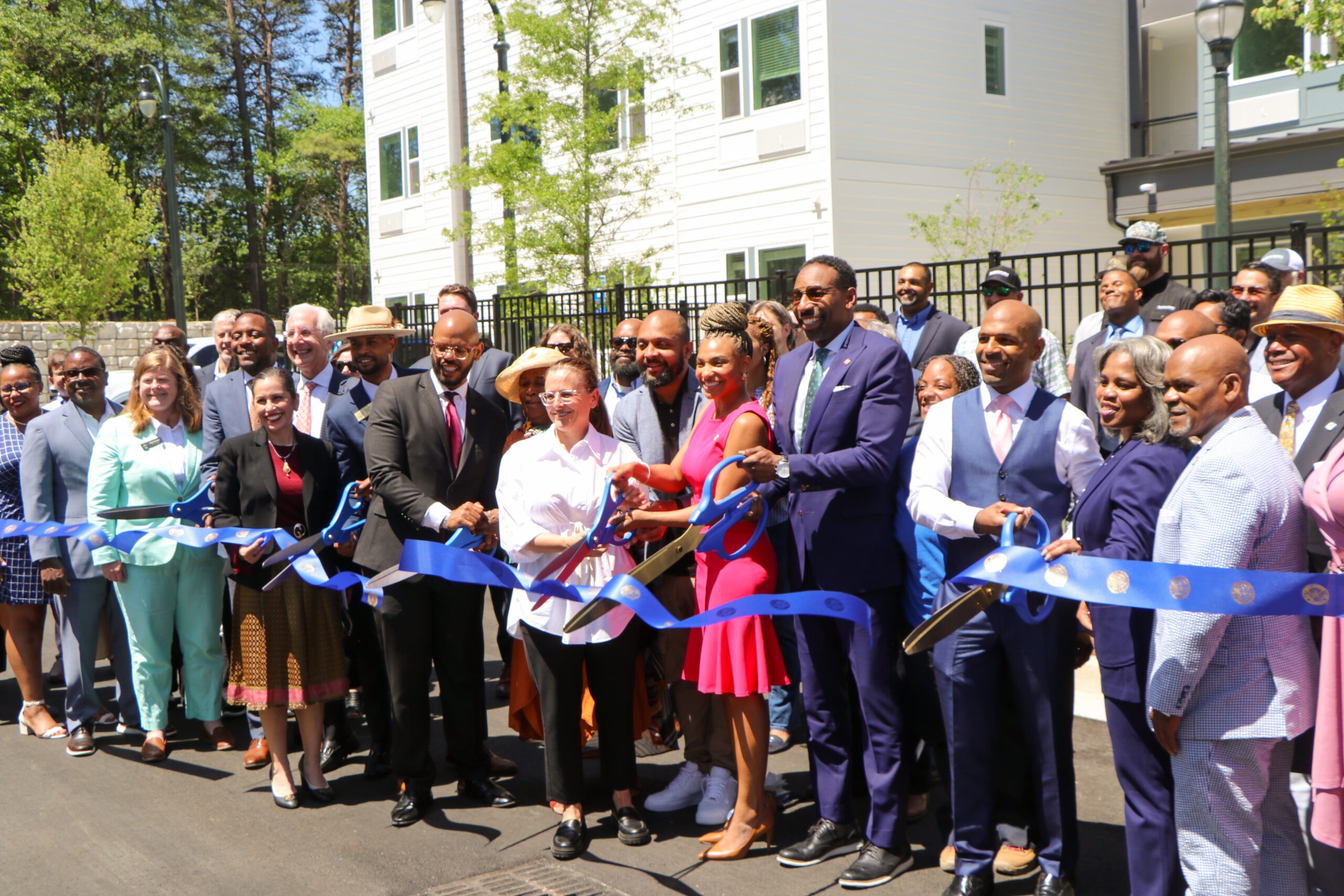
Atlanta leaders, community members, and housing advocates gathered this week in the Mechanicsville neighborhood to celebrate a major milestone in the city’s fight against homelessness: the ribbon cutting of The Beacon at Cooper Street, the final development needed to reach the city’s goal of 500 rapid housing units.
Mayor Andre Dickens called the moment “promises made and promises kept,” emphasizing that the project represents more than just construction.
“This work is not just about numbers,” Dickens said. “It represents 500 opportunities, 500 lives, and 500 chances at stability and dignity.”
Mayor Andre Dickens The Beacon @ Coopers Street – Photo by Milton Kirby
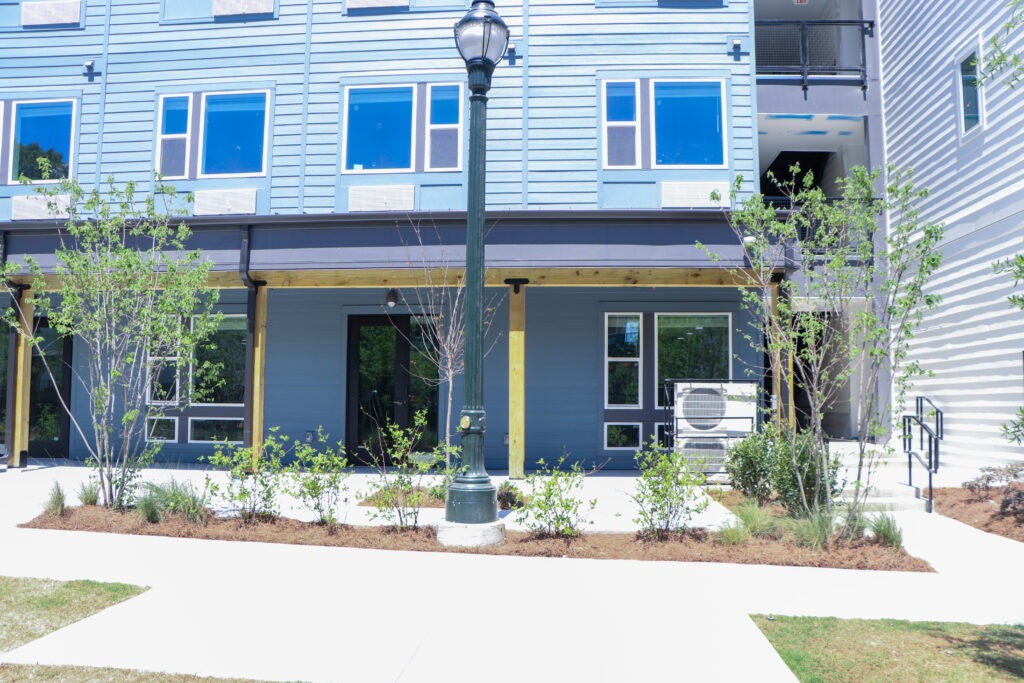
The Beacon at Cooper Street includes two multi-story buildings with 100 modular studio units, each designed to provide safe, supportive housing for individuals experiencing homelessness. The development also includes on-site offices for case management, mental health services, and other support systems aimed at helping residents rebuild their lives.
A Citywide Effort
The project is part of Atlanta’s broader Rapid Housing Initiative, a strategy launched by the Dickens administration to address homelessness by quickly converting underutilized city-owned land into permanent supportive housing.
From its earliest days, the initiative relied on partnerships across government, nonprofit organizations, developers, and the private sector.
“This is what it looks like when we listen, when we engage, and when we build together,” Dickens said during the ceremony.
City officials highlighted earlier developments in the initiative, including The Melody, a container-based housing community that gained international recognition, and Waterworks Village, a modular apartment complex delivered in record time.
Community Support in Mechanicsville
Leaders also praised the Mechanicsville community for embracing the project, noting that neighborhood support played a key role in its success.
“There’s a lot of ‘not in my backyard’ across the country,” Dickens said. “But this community said yes—and that made all the difference.”
District 4 Councilmember Jason Dozier described the development as both personal and transformative, pointing to the broader impact stable housing can have on families and neighborhoods.
“Housing creates the foundation for safety, health, and economic stability,” Dozier said.
More Than Housing
Officials emphasized that The Beacon is not just a housing project, but part of a larger ecosystem of care.
Thirty units are dedicated to individuals who need ongoing medical and mental health support through partnerships with local healthcare providers. The development also includes a “housing navigator” program to help individuals transition from hospitals and shelters into stable living environments.
The Beacon @ Coopers Street – Photo by Milton Kirby
Research cited during the event shows that rapid housing programs are effective, with 70 to 90 percent of participants remaining housed after one year.
Looking Ahead
While the ribbon cutting marked a significant achievement, leaders were clear that the work is far from finished.
Speakers emphasized that while the milestone is significant, much work remains to address homelessness across the city.
With the 500-unit goal now achieved, city officials signaled plans to expand the model and continue building housing solutions across Atlanta and the broader region.
As Dickens put it, “Love ought to look like something—and today, you can see what that looks like.”
A life taken too soon leaves a community grieving, questioning motive, seeking justice, and confronting the painful truth that no loss is ever just another headline.
By Milton Kirby | Charlotte, NC | April 15, 2026
There are moments when a life is taken so suddenly, so violently, that the world seems to tilt. A man is gone, and the questions begin to circle like smoke: Was it for property? Was it for money? Was it sheer meanness? Did the perpetrator believe he would get away with it—or did it even matter to him at all?
A face that once belonged to someone loved, someone known, someone real, now risks becoming one more among the faceless victims of senseless violence. His memory will remain vivid to those who cared for him, but to the wider world he becomes another name, another headline, another loss absorbed into the background noise of tragedy.
It isn’t that people don’t care. It’s that they don’t feel the closeness. When pain doesn’t touch our own doorstep, we often treat it as someone else’s burden. But violence is never someone else’s problem. It is a wound to the whole community, whether we acknowledge it or not.
No article can stop the next person determined to commit harm. But sometimes words reach the ones who are still reachable—the ones whose hearts are open enough to be changed.
When details are scarce, the mind fills the silence with questions: What if? Could anything have been done? Should something have been done differently? These questions haunt the people left behind, because the truth is simple and brutal: no amount of money, property, or pride is worth a human life.
So what do we do with the pain? We keep living. We keep hoping. We try—slowly, painfully—to place the hurt behind us. The hurt and images soften with time, but they never disappear. The face never leaves us.
And then comes the hardest question of all: Could I have done something if I had been there? The honest answer is often the only one we have—I don’t know.
Technology has made policing more efficient. Investigators can find perpetrators faster than ever before. We can only hope that in this case, justice follows truth, and truth follows evidence.
When the full story emerges, one family may feel a measure of relief, even as the pain deepens. Another family may face shock, disappointment, or disbelief. Violence ripples outward, touching more lives than the one it took.
And for those responsible, the question lingers: If they could do it all over again, would they? Would they choose differently—not because they were caught, but because hindsight reveals the weight of what they destroyed?
These are not easy questions. But they are necessary ones. Because the value of a life demands nothing less.
Support open, independent journalism—your contribution helps us tell the stories that matter most.
“Smart devices now track heart rate, sleep, and glucose, turning everyday wear into powerful tools for health awareness, prevention, and community wellness.”
You can track your heart rate, sleep, even glucose levels just by strapping on a device. Are these next-generation right for you?
By Jeanne Dorin McDowell | April 12, 2026
Wearable health monitors have come a long way since Fitbits and Apple Watches introduced the idea of digitally counting steps and calories burned.
Today’s wearables include a dizzying array of devices—armbands, smart rings, smart eyeglasses, chest-strap monitors, clothing embedded with sensors—to track physical activity, heart rate, blood pressure, temperature, blood oxygen, glucose levels, stress, sleep patterns and movement.
And while it can be fun to track your biometrics on your own, wearables are having a big impact on doctor-patient relationships by giving health care providers real-time access to critical health data. Some can record and transmit electrocardiogram (ECG) readings; others can detect falls and epileptic seizures before they happen.
“I ask my patients to self-monitor to tell me what their heart rates are,” says Niraj Varma, M.D., a cardiac electrophysiologist and professor of medicine at the Cleveland Clinic who routinely recommends wearable monitors for patients diagnosed with atrial fibrillation (A-fib), a common heart disorder that can disrupt blood flow and lead to blood clots and an increased risk of stroke.
Nearly 1 in 3 Americans use a wearable device, such as a smartwatch or band, to track their health and fitness. But not all remote monitors are created equal.
Consumer-grade wearables, such as smart-watches and rings, which you can buy online or at retail stores, may be fairly accurate but are not FDA-approved, which means they have not met stringent regulatory requirements.
Medical-grade wearables, such as most continuous glucose monitors, which measure sugar levels, usually require a doctor’s prescription and are FDA-approved. Health information is transmitted via an app or a receiver and can be shared remotely with a physician, so it can be interpreted and discussed with the patient.
While the accuracy of consumer devices varies across brands and the metrics that are being measured, they are not considered as accurate as medical-grade wearables.
But even if the accuracy falls short, one of the intrinsic values of consumer wearables is that they can signal that something is wrong.
“If you are tracking your activity and motion as well as heart rate, and suddenly there’s a change—not from yesterday to today but a definite trend of something happening—the wearable can be an alert system that tells you something is going on,” says Albert Titus, a professor of biomedical engineering at the University at Buffalo.
Here’s a rundown of widely used wearable tech devices and what doctors who work with them have to say.
SMARTWATCHES AND FITNESS TRACKERS
BEST FOR: Monitoring basic health metrics and exercise
If your idea of a fitness tracker dates back 15 years or so, you might want to see what the new models can do. Through a technique called photoplethysmography, which detects heart rate by measuring changes in the volume of blood flowing near the surface of the skin, sensors can measure heart rate and even stress levels.
They can also flag an irregular heartbeat, says Erica Schorr, associate professor in the School of Nursing at the University of Minnesota and a member of the American Heart Association’s Center for Healthy Technology and Innovation, Digital Science Working Group. That said, watches and trackers are not a replacement for regular checkups; they can’t diagnose a heart attack or other serious medical condition.
SMART RINGS
BEST FOR: Monitoring sleep
Smart rings emit light at specific wavelengths into the skin, then measure how much of that light is reflected back to the ring. Since blood absorbs more light than other tissue does, the ring can monitor the rhythmic ebbs and flows in blood volume to track your heart rate and sleep cycles. These devices typically connect to a phone app and may require a monthly subscription.
Smart rings may compile heart rate data more accurately than smartwatches and may produce more accurate measurements in people with darker skin tones than wrist-worn devices do. (Melanin, a dark pigment in the skin, can absorb some of the light emitted by optical sensors and distort heart rate measurements. But there is less melanin on the inside of the fingers than on the wrist.)
While sleep monitoring is a selling point of these devices, not everyone is sold on the value of this function. “It’s challenging for many wearables to accurately assess deep and REM sleep,” says Cheri Mah, M.D., a sleep physician and adjunct lecturer with the Stanford Sleep Medicine Center. “People can get fixated on their daily sleep outcomes and on perfecting those numbers.” Instead, she recommends looking at your results in terms of trends rather than nightly performance.
SMART GLASSES AND SMART CLOTHING
BEST FOR: Serious fitness enthusiasts
Smart clothing refers to garments—usually shirts and leggings—with embedded sensors that monitor vital signs and track physical performance. Like other health wearables, smart clothing monitors heart rate, temperature, heart rhythm and physical movements; the data is transmitted via Bluetooth to an app in real time. Some smart clothes send alerts when the wearer experiences an irregularity or a health problem.
Even eyeglasses can come with health trackers nowadays. Smart eyewear is equipped with sensors and Bluetooth connectivity embedded in the frames, and some can monitor heart rate and calories burned. But, like wrist-based monitors, they’re not as accurate as some other products.
CHEST-STRAP HEART MONITORS
BEST FOR: Serious athletes, people with heart conditions While the heart rate monitors in your smartwatch or ring can provide useful data about your general fitness and exercise levels, a wearable that wraps around your chest to measure heart rate is considered the gold standard. Chest-strap monitors use electrocardiography to measure electrical signals from the heart, which makes them more precise than the sensors used in wrist- or finger-based devices. In April, researchers at the University of Missouri College of Engineering announced the development of a starfish-shaped wearable powered by Al technology that can detect heart problems with 90 percent accuracy.
Some of these devices connect with a cable or wirelessly to a device that you can tch to your clothing or carry in a pock-while many newer models use wireless nections to send data to your phone or another device.
If you have a heart condition, your doctor might prescribe a medical-grade heart monitor that records the heart’s rhythm, such as a Holter, which your physician reviews after return the device. These monitors are even more accurate than the retail versions.
CONTINOUS GLUCOSE MONITORS
BEST FOR: People with diabetes or prediabetes, biohackers
Continuous glucose monitors (CGMs), which are worn as a patch and use a sensor that’s inserted under the skin with a needle, continuously record glucose levels, sending an alert when they rise or fall too far.
“People who benefit most from CGMs are those with diabetes who require insulin therapy, because these monitors have been associated with reducing the risk of severe hypoglycemia, or low blood sugar,” one of the most feared complications of insulin use, says Aoife M. Egan, an endocrinologist at the Mayo Clinic.
The American Diabetes Association advocates for CGM accessibility for people with type 1 and type 2 diabetes who are required to take insulin. But CGMs have also become popular with people who just want to know more about the impact of food, stress and activity on their glucose levels. The emergence of several kinds of nonprescription CGMs have empowered the biohacking-curious to measure the sugar in their bloodstream, although over-the-counter CGMs give less-detailed feedback than prescription models.
An effective glucose monitor needs to pierce the skin, researchers say. Last year the FDA alerted consumers that using smartwatches or smart rings that claim to measure blood glucose levels without piercing the skin “can lead to errors in diabetes management.”
Is a Wearable Monitor Right for You?
Wearables continue to evolve: Scientists are working on a smart ring that can help detect hand tremors, a Parkinson’s disease symptom; wearables that will be able to detect neurodegenerative diseases, like multiple sclerosis and ALS, in the earliest stages; and even a wrist-worn device that tracks activity patterns, which may catch early signs of Alzheimer’s disease. But while wearables have myriad benefits, some people find that continuous monitoring of their health creates anxiety. Fluctuations in heart rhythms or blood sugar levels are normal and often insignificant, but if your device sends up an alarm, it can provoke unneeded stress. “Telling someone they’re experiencing a heart arrhythmia if they don’t feel it can create more anxiety,” says Lindsey Rosman, assistant professor of medicine in the division of cardiology at the University of North Carolina School of Medicine. Rosman says we need more studies both on the adverse effects of wearables and on who would actually benefit from these devices. —J.M.
Jeanne Dorin McDowell writes about health and wellness for national print and digital publications.
Support open, independent journalism—your contribution helps us tell the stories that matter most.
Obama Presidential Center announces 2026 ticket sales, offering immersive exhibits, free campus access, and historic experiences celebrating Barack and Michelle Obama’s legacy.
By Milton Kirby | Chicago, IL | April 7, 2026
The Obama Foundation has announced key ticket sale dates for the highly anticipated museum at the Obama Presidential Center, marking a major milestone as the campus prepares to open to the public this summer.
According to the Foundation, Founding Members will gain early access to purchase museum tickets beginning April 21, while general public ticket sales will open on May 6.
The broader campus, located in Chicago’s historic Jackson Park, will officially open June 19, offering free access to a wide range of public amenities. Visitors will be able to explore walking trails, gardens, a Chicago Public Library branch, and nearly 30 commissioned works of art, along with scenic views of Lake Michigan.
The museum itself will serve as the centerpiece of the campus, featuring immersive, four-floor exhibits dedicated to the presidency of Barack Obama and the influence of Michelle Obama. Through interactive storytelling and multimedia installations, the experience is designed to explore both the accomplishments and ongoing challenges tied to American democracy.
Among the museum’s featured attractions is a full-scale replica of the Oval Office, allowing visitors to sit behind the Resolute Desk, as well as exhibits highlighting Michelle Obama’s fashion legacy and the broader impact of the administration’s two terms.
Special film installations will also spotlight campaign volunteers who helped build the Obama movement and Americans whose personal letters received direct responses from the president.
General admission tickets will be priced at $30 for adults and $23 for children ages 3 to 11, with free entry for children under two. Illinois residents will receive discounted pricing and will also have access to free admission every Tuesday beginning June 23, though advance reservations are strongly encouraged due to expected demand.
All museum visits will be timed-entry, and officials recommend reserving tickets online ahead of arrival. Initial ticket availability will cover dates from June 19 through November 30, 2026.
For visitors seeking a more in-depth experience, the Foundation will offer a 90-minute Campus Experience Tour. The guided tour includes museum admission, priority access to key exhibits, and behind-the-scenes entry into select non-public areas of the facility.
Foundation CEO Valerie Jarrett emphasized that the Center is intended to be more than a museum. It is designed as a civic space rooted in community, learning, and inspiration.
The project represents a significant cultural and economic investment in Chicago’s South Side, with leaders noting its potential to generate long-term economic growth while creating a global destination tied to the legacy of the nation’s first Black president.
As anticipation builds, the Obama Presidential Center stands poised to become both a historical landmark and a living space for civic engagement—inviting visitors not only to reflect on history, but to shape what comes next.
Nathaniel “Mr. Bowleggs” Dansby’s Soul Country journey reclaims Black roots in country music, blending faith, legacy, and storytelling into a timeless cultural revival.
Nathaniel “Mr. Bowleggs” Dansby Reclaims the Roots of Country Music
By Milton Kirby | Atlanta, GA | April 6, 2026
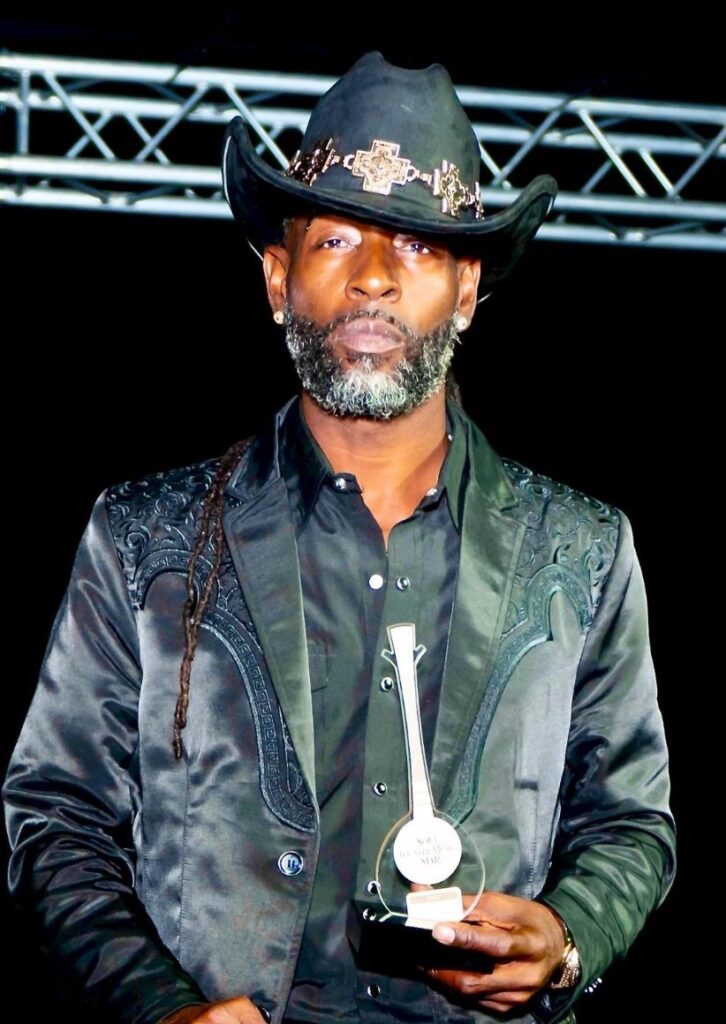
Nathaniel Dansby’s journey into Soul Country began long before he stepped onto a stage. Long before he became “Mr. Bowleggs,” the rising force who fought his way from third place to champion of the Soul Country Music Star (SCMS) competition, he was simply a boy in a crowded Alabama home—one of six children raised in a family where music wasn’t a hobby. It was a mandate.
“We were kind of like the Jackson 5,” he said with a grin. “We got our tail whooped if we didn’t stay in the room and practice until we perfected it.”
Under the strict but loving guidance of his mother, Dansby began singing at age three. By five, he was performing publicly with his siblings as The Little Gospel Wonders, carrying harmonies from church revivals to community gatherings across Alexander City. His mother saw something in him early, something she named out loud.
Nathaniel Dansby – Courtesy Photo
“My mom told me, ‘Nate, you’re my special child,’” he said. “I lost her in 1998, but I still hear her voice. Before I entered this competition, she came to me and said, ‘Hey, you got it. You’re a winner.’ I had to give it my all because I had that confirmation.”
Her belief became the quiet engine behind his reinvention, heartbreak, and eventual triumph.
A Calling, Not a Career
Dansby doesn’t describe music as a profession. He calls it a calling—one shaped by faith, family, and a desire to give people something real.
“I don’t want to create music just for now,” he said. “I want it to last forever.”
That spiritual grounding shapes not only how he sings, but why he sings. His mission is simple: to give people hope, to make them feel something, and to create music that outlives him.
Finding Country and Finding Himself
Country music was not always part of Dansby’s plan. After years rooted in gospel and R&B, he began singing country music about seven years ago. What started as a new direction quickly became something deeper, something that felt like home.
“I never thought in a million years I’d be singing country,” he said. “But it fits my heart.”
Country music offered him something the other genres didn’t: a place where storytelling, vulnerability, and emotional clarity mattered more than vocal gymnastics.
“Country music is a story. It’s life. I want people to see what I’m singing about.”
Rickey Davis Scott the musician and cultural historian and Soul Country Music Star judge —puts it plainly:
“The history of country music… it’s all from us. From the banjo in South Africa to the rhythms that shaped Hank Williams. Black artists aren’t new to country—we’re the architects.”
Season One: The Third Place Finisher Who Refused to Quit
Dansby’s first appearance on the SCMS stage didn’t end in victory — in fact, he didn’t even make it to the top two. He finished third at the Atlanta regional competition in Season One. The placement stung, not because he expected an easy win, but because he knew he hadn’t yet shown the fullness of who he could be. “I thought, ‘I’m good, I got this,’” he admitted. “But I didn’t. I wasn’t prepared.”
Scott remembers it clearly.
“He went up there and sang R&B,” Scott said. “He didn’t know the country lyrics, the catalog, the tradition. The voice was there, but the identity wasn’t activated yet.”
The crowd loved him. The judges didn’t. And he felt the sting.
But he didn’t quit.
“It taught me to give everything—my pain, my soul—because if people can’t feel it, there’s no point.”
The Transformation
After Season One, Dansby went to work.
He studied country music intentionally, the artists, the phrasing, the emotional truth‑telling that defines the genre. He learned to sing country, not imitate it.
“He’d come to me talking about songs he heard on the radio,” Scott said. “That’s when I knew he was embracing the culture, not just the sound.”
Dansby became, in his own words, a musical chameleon, able to shift between genres without losing himself.
“I realized the only thing stopping me was me.”
Season Two: The Redemption and the Crown
When Dansby returned for Season Two, he wasn’t the same artist who had finished third the year before. He came back humble, focused, and prepared—determined not to repeat the mistakes of his first run.
He was grounded. Focused. Present.
“I wanted to give everything in my soul so people could feel it,” he said.
And they did.
This time, he didn’t just advance, he dominated. Dansby won the Atlanta regional competition, earning his place on the national stage in Hollywood. And when he stepped into that spotlight, he delivered the performance of his life.
He killed it. The festival crowd loved him. And the judges felt what they hadn’t felt before: a fully realized Soul Country artist.
When his name was called as the Season Two national winner, the room erupted. The man who once doubted whether he belonged in country music had now proven himself at the highest level.
“Going to LA showed me I belonged,” he said. “It showed me I could stand with anybody.”
Now, with a potential 2026 tour with the Bill Pickett Invitational Rodeo (BPIR) on the horizon, Dansby returns to the national spotlight not as a newcomer, but as a contender—sharpened, seasoned, and ready for whatever comes next.
“It was the greatest feeling of my life,” he said. “I’ve never felt anything like it.”
“I want to leave my footprint in the sand. I want people to say, ‘He was here, and he’s here to stay.’”
A Performer Driven by Connection
On stage, Dansby doesn’t perform to the audience, he performs with them.
He describes entering a “zone,” where the goal is not perfection but impact. Whether through clapping, movement, or quiet attention, he looks for signs that the audience feels the music.
“That connection fuels me,” he said. “It turns each song into a shared experience.”
The Cultural Weight of Soul Country
To understand Dansby’s rise, you have to understand the movement behind him.
Soul Country Music Star is not just a talent competition—it is a cultural restoration. A reclamation of a musical tradition whose roots are Black, Southern, rural, and deeply African.
“We’re creative people,” Scott said. “Everything the world loves—we created. Country music is no different.”
Dansby is part of that reclamation—a living reminder of what was lost, and what is returning.
BPIR: The Cultural Homecoming
The Bill Pickett Invitational Rodeo—the nation’s oldest Black rodeo—has become a proving ground for Soul Country artists. It is where Black audiences show up early, buy tickets, buy merch, and support their own.
“It’s a blessing to the people,” Dansby said. “That’s what excites me most—connecting with them.”
Scott sees BPIR as a cultural anchor.
“It’s a community” he said. It’s a place where our artists can be embraced without running away from their own people.”
The Duet the World Is Waiting For
Dansby and fellow Soul Country artist Kirk Jay have been discussing a duet—a collaboration both artists believe could be a defining moment for the genre.
Dansby says the contrast in their vocal styles is what makes the idea so powerful.
“When we finally record it, it’s going to be something special,” he said.
Scott agrees.
“Two Black men in country, both with powerhouse voices—that’s rare. That’s history.”
A Legacy in the Sand
At 43, Dansby sees his career not as a late start, but as a divine timeline.
He wants his music to be evergreen. He wants his story to inspire. He wants his children—and the world—to know that anything is possible.
“I want to leave my footprint in the sand,” he said. “I want people to say, ‘He was here, and he’s here to stay.’”
As “Mr. Bowleggs” continues his ascent, he carries Alexander City, The Little Gospel Wonders, and the full weight of Soul Country’s rebirth with him—proving that the soul of country music has always been right where it started: in the heart.
Country Roots, Diverse Beats: Celebrating the Rich Tapestry of Soul in Country Music.
Agricenter International Showplace Theater – 7777 Walnut Grove Rd, Memphis, TN 38120
Metro Atlanta leaders urge Governor Kemp to veto HB 369, warning the bill targets five counties, undermines voter clarity, and threatens local control.
Milton Kirby | Atlanta, GA | April 5, 2026
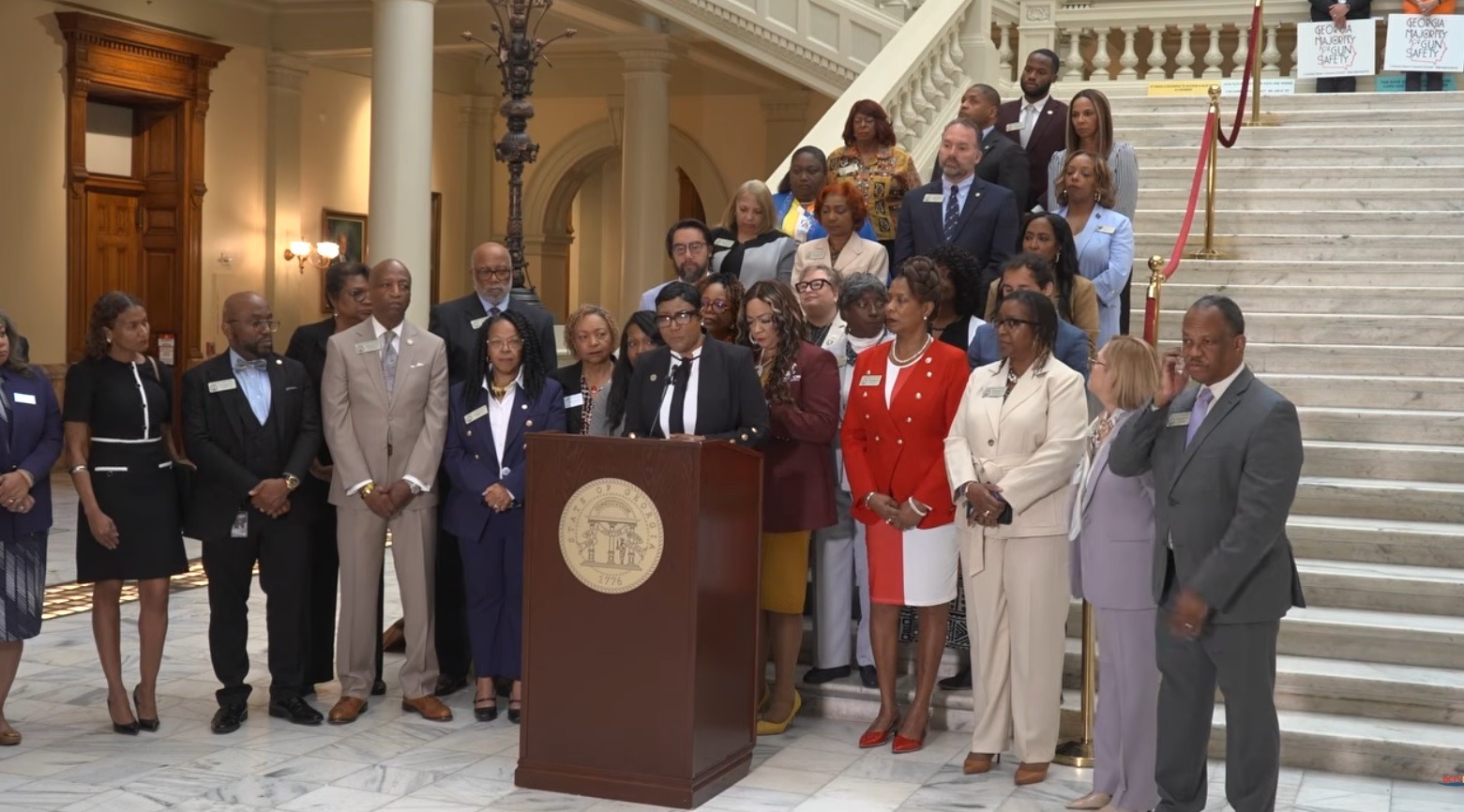
A coalition of metro Atlanta leaders gathered at the Georgia State Capitol on March 31 to deliver a unified message: veto House Bill 369.
Led by DeKalb County CEO Lorraine Cochran-Johnson, officials from DeKalb, Fulton, Cobb, Gwinnett, and Clayton counties stood alongside members of the Georgia House Democratic Caucus to oppose the Senate substitute version of the legislation. Their appeal was directed squarely at Governor Brian Kemp.
At issue is a provision that would make local elections nonpartisan—but only in five of Georgia’s 159 counties.
A Bill Reshaped Late in the Process
State Representative Carla Drenner opened the press conference by raising concerns about how the bill evolved. She noted that HB 369 “began as something entirely different” before being significantly altered through a Senate amendment that did not receive full debate in the House.
“That matters,” Drenner said, emphasizing that legislative process ensures transparency and public trust.
Leaders argued that such a late-stage transformation raises questions about fairness, particularly given the bill’s targeted scope.
What HB 369 Would Do
Under the proposed substitute, elections for key local offices—including commissioners, district attorneys, and tax officials—would become nonpartisan in Clayton, Cobb, DeKalb, Fulton, and Gwinnett counties.
Those counties represent nearly four million residents and a significant share of Georgia’s economic activity.
Cochran-Johnson and other leaders emphasized that these same counties are largely led by Democratic and African American officials—an overlap they say cannot be ignored.
“If fairness and election integrity are truly the goals,” Cochran-Johnson asked, “why does this bill apply to only five counties out of 159?”
Concerns Over Voter Impact
Speakers repeatedly stressed that removing party affiliation from ballots could make it harder for voters to make informed decisions.
“It matters who represents you,” Cochran-Johnson said. “Party affiliation is often a precursor to values and ideology.”
Clayton County Chairwoman Dr. Alieka Anderson Henry echoed that concern, warning the bill would create “two different election systems” within the same state—one for most counties and another for just five.
“That is not fairness,” she said. “That is discrimination.”
A Broader Question of Local Control
Beyond voter clarity, leaders framed the issue as one of local governance.
Henry County Chairwoman Carlotta Harrell, whose county would not be directly affected, said the bill sets a troubling precedent.
“If the state can redefine election structures in one set of counties today,” she said, “it opens the door for similar interventions across the state in the future.”
That sentiment was echoed across the podium: decisions about local elections, they argued, should originate within local communities not be imposed by the state.
A United Regional Front
The event brought together an unusually broad coalition of elected officials across metro Atlanta, signaling the regional weight behind the opposition.
Gwinnett County Representative Dr. Jasmine Clark described the bill as a “targeted” effort to reshape political power, while Cobb County Chairwoman Lisa Cupid called for collaboration rather than division.
Even counties not directly impacted stood in solidarity, underscoring concerns that the legislation could reshape governance statewide.
The Call to Action
Cochran-Johnson closed her remarks with a direct appeal to the governor.
“If our counties, our state, and our nation are to remain beacons of democracy,” she said, “we must reject laws like HB 369 that target, divide, and discriminate under the guise of good policy.”
She added a final warning: “Today, both the people and the world are watching Georgia. Let us not fall on the wrong side of history. Democracy has a price.”
As of this writing, Governor Kemp has not publicly indicated whether he will sign or veto the bill.
Metro leaders say they will continue to monitor its progress—and remain prepared to push back.
Truth Seekers Journal thrives because of readers like you. Join us in sustaining independent voices.
The Obama Foundation has announced a major youth programming partnership with After School Matters, positioning Chicago teens at the center of its mission as the Obama Presidential Center prepares to open this summer.
The partnership will bring paid, hands-on programs to teens across Chicago’s South Side, marking a significant investment in youth development, workforce readiness, and community engagement. The initiative will operate through the Center’s Teen Action Lab, a dedicated space designed to empower young people with practical skills, mentorship, and leadership opportunities.
According to the Foundation, the programs will launch in July with two initial offerings: Basketball, Health & Wellness and Volleyball, Health & Wellness. Both programs will take place at Home Court, a key facility on the Presidential Center campus, and are open to high school students ages 14 to 18 from South Shore, Woodlawn, and Washington Park.
Participants will not only gain access to structured athletic programming, but also receive stipends—an important feature that reflects a broader commitment to valuing teens’ time, effort, and growth.
“This is about more than sports,” said Valerie Jarrett, CEO of the Obama Foundation, in the official announcement. “It’s about building skills, strengthening communities, and inspiring the next generation of changemakers.”
The collaboration signals a deeper alignment between two organizations with long-standing commitments to youth empowerment. For more than 35 years, After School Matters has provided Chicago teens with access to after-school and summer programs spanning the arts, STEM, communications, and leadership development. Its project-based model, led by industry professionals, has reached hundreds of thousands of young people across the city.
Mary Ellen Caron, CEO of After School Matters, emphasized the broader impact of the partnership, noting that programs like these create safe, welcoming spaces where teens can grow both personally and professionally.
“Sports can be a gateway,” Caron said. “They build confidence, create connection, and open doors to mentorship and opportunity that extend far beyond the court.”
The Teen Action Lab is expected to expand over time, with additional programming and partnerships already in development. Organizations such as My Brother’s Keeper Alliance, Girls Opportunity Alliance, Chicago Public Schools, the Chicago Park District, the Chicago Public Library, and Laureus USA are all expected to contribute to a growing ecosystem of youth-focused initiatives at the Center.
The announcement underscores the broader vision behind the Obama Presidential Center—not just as a museum or tourist destination, but as a living civic space rooted in community impact. Located on Chicago’s South Side, the Center aims to generate economic opportunity while serving as a hub for education, leadership, and public engagement.
For teens in surrounding neighborhoods, the opportunity is immediate and tangible: paid programs, skill-building experiences, and direct access to mentorship—all within a space designed to reflect their potential.
Applications for the Teen Action Lab programs are now open, with limited spots available. Interested students must complete a Program Interest Form and participate in an interview process.
As the Obama Presidential Center prepares to open its doors, this partnership offers an early glimpse into how the campus intends to function—not just as a symbol of history, but as an active investment in the future.
SNAP benefits in 2026 bring updated income limits, work requirements, and policy changes under federal law, impacting how low-income households qualify for food assistance nationwide.
Milton Kirby | Decatur, GA | April 4, 2026
The federal government’s largest anti-hunger program is entering a period of renewed attention, as policy updates and eligibility rules continue to shape how millions of Americans access food assistance.
The Supplemental Nutrition Assistance Program (SNAP), administered by the U.S. Department of Agriculture, remains a critical safety net for low-income families, seniors, and individuals facing economic hardship. Its mission is straightforward but essential: increase food security, improve nutrition, and support American agriculture.
Recent legislative changes tied to the One Big Beautiful Bill Act of 2025, signed by Donald Trump on July 4, 2025, have introduced new policy considerations. Federal agencies are continuing to release guidance on how those provisions will be implemented, signaling that SNAP may evolve further in the months ahead.
Who Qualifies for SNAP in 2026
Eligibility for SNAP is based on a combination of income, household composition, and resources. In most cases, households must meet both gross and net income thresholds, though households with elderly or disabled members may only need to meet net income limits.
For the current cycle (October 1, 2025 – September 30, 2026), a household of four must generally earn no more than $3,483 per month in gross income and $2,680 in net income to qualify.
Households are defined not just by who lives together, but by who purchases and prepares meals together. That means spouses and most children under 22 are typically counted as one unit, even if meals are prepared separately.
Applicants who are approved can receive benefits retroactive to the date they applied, an important provision for families experiencing sudden financial hardship.
Assets, Vehicles, and What Counts
SNAP also considers household resources, though not all assets are counted. A primary home, retirement accounts, and resources tied to programs like SSI or TANF are excluded.
In most cases, households may have up to $3,000 in countable resources, or $4,500 if at least one member is elderly or disabled.
Vehicles are treated with nuance. Cars used for work, transportation of disabled individuals, or as a primary residence are typically excluded. However, vehicles with significant market value may count toward resource limits depending on state rules.
Work Requirements and Exemptions
Work requirements remain a central feature of SNAP eligibility. Most participants must register for work, accept suitable employment, and participate in training programs if assigned.
Able-bodied adults without dependents (ABAWDs) must work or participate in qualifying programs for at least 20 hours per week to receive benefits beyond three months in a three-year period.
However, several groups are exempt from these rules, including seniors, veterans, pregnant women, individuals experiencing homelessness, and those with physical or mental health limitations.
How to Apply and Stay Eligible
Applications are handled at the state level, and applicants must go through a certification process. Once approved, households receive benefits for a set period and must recertify to continue receiving assistance.
The USDA provides a national directory of state SNAP offices, allowing applicants to find local resources and begin the process online or in person.
A Program Under Watch
As economic conditions shift and federal policy evolves, SNAP remains a focal point in national conversations about poverty, workforce participation, and food access.
For many families, the program is not just assistance, it is stability.
And in a time of rising costs and uncertain economic signals, that stability continues to matter.
Support open, independent journalism—your contribution helps us tell the stories that matter most.
Henry County highlights infrastructure growth, job creation, and public safety gains as Chairwoman Carlotta Harrell outlines a strategic vision during the 2026 State of the County.
By Milton Kirby | Stockbridge, GA | April 3, 2026
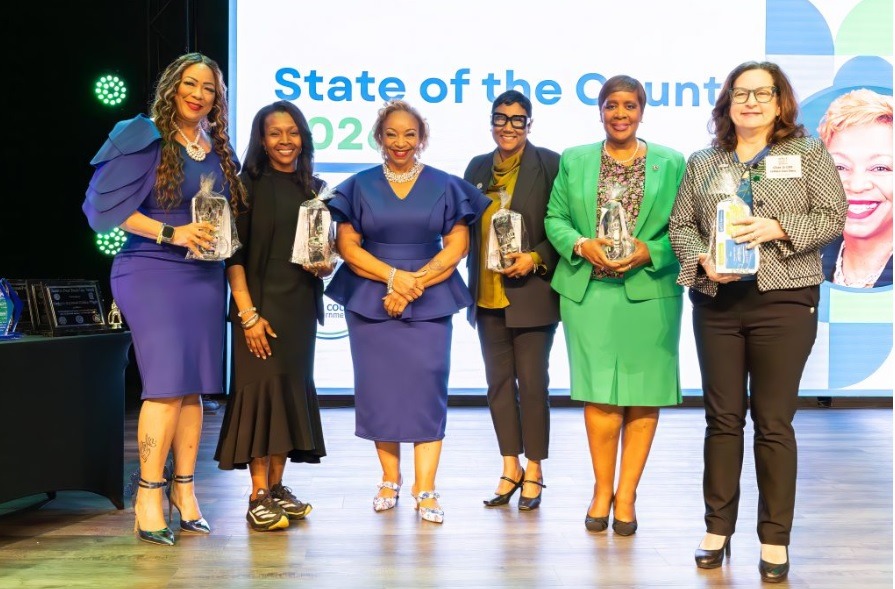
More than 400 business leaders, elected officials, and residents gathered Thursday morning as Council for Quality Growth hosted the 2026 State of Henry County address, where Chairwoman Carlotta Harrell outlined a vision grounded in resilience, growth, and strategic planning.
Held at Stockbridge Community Church, the annual event brought together a cross-section of the region’s leadership to hear how Henry County is navigating economic pressures while continuing to expand infrastructure, public safety, and economic opportunity.
“This past year tested communities across the country,” Harrell said. “But Henry County remained strong by maximizing resources, strengthening partnerships, and continuing to move forward.”
Infrastructure and Mobility Investments Accelerate
A central focus of the address was transportation, where Harrell detailed ongoing roadway improvements across key corridors, including Henry and McDonough Parkway, Burg and Dutchtown Roads, and Mill and Rock Quarry Roads. Sidewalk expansions are also underway on Fairview and Flippen Roads.
The county plans to resurface 200 roads between now and next spring through a $43.8 million investment funded in part by SPLOST. Harrell also announced plans to pursue T-SPLOST 2 in November, signaling continued reliance on voter-backed funding for long-term mobility improvements.
Technology is also playing a role. Henry County has begun using connected vehicle systems that synchronize traffic signals with emergency vehicles to improve response times—a move reflecting broader regional innovation trends.
Public Safety Gains and Service Expansion
Public safety improvements showed measurable results in 2025. Harrell reported a 17% increase in DUI and drug-related arrests, alongside declines of up to 30% in key crime categories such as vehicle theft and burglaries.
The county also expanded services through jail renovations, accountability court programs, and telehealth partnerships for non-emergency 911 calls. Henry County Fire Rescue responded to more than 41,000 service calls last year, underscoring growing demand.
Economic Development Drives Job Growth
Economic development remains a cornerstone of Henry County’s strategy. In 2025, the Henry County Development Authority helped attract 920 new jobs and $883 million in capital investment.
Major projects include a $300 million plastics recycling facility by Nexus Circular, a $40 million investment by Brava Roofing Tiles, and a $115 million cold storage facility by United States Cold Storage.
According to federal labor data, Henry County led Georgia’s largest counties in year-over-year employment growth. Workforce partnerships with local schools and Southern Crescent Technical College are helping align training with these new opportunities.
Healthcare expansion is also underway. Piedmont Henry Hospital is adding 100 beds and three new operating rooms, signaling continued population growth and healthcare demand.
Quality of Life Investments Expand Across the County
Harrell highlighted $53 million in park and recreation investments, including new amenities at North Mount Carmel Park, Bud Kelley Park, Butler’s Bridge Park, and Cochran Park.
A major highlight is the nearly completed Henry County Aquatic Center and Outdoor Water Park, expected to open this summer. The county is also expanding senior programs and community services, reflecting a broader focus on livability.
Recognizing Service and Leadership
Several individuals and organizations were honored during the event. Kaiser Permanente and Sam Baker received Henry Hero Awards, while Officer Robert Adams was recognized for lifesaving actions during a tornado response.
Additional honors included awards to Fire Rescue teams from Stations 7 and 16, and Capital Projects Director Lynn Planchon for leadership on major county initiatives.
A Regional Vision for Growth
Harrell closed her address with a focus on planning and sustainability, highlighting the county’s Unified Land Development Initiative and regional mobility strategies.
“Growth without structure is a risk, but growth with strategy is an opportunity,” she said.
Regional leaders echoed that message. Michael E. Paris, CEO of the Council for Quality Growth, praised Henry County’s long-term vision, while Atlanta Regional Commission officials provided updates on water planning and infrastructure coordination.
Sponsors including Truist and Geosam Capital Group also reinforced the importance of public-private collaboration in shaping the county’s future.
As one of eight State of the County events hosted annually by the Council, the Henry County address continues to serve as a key forum connecting business, government, and community stakeholders across metro Atlanta.
MARTA launches Better Breeze fare system, introducing tap-to-pay and account-based transit. Riders have until May 2, 2026, to transition from old Breeze cards.
By Milton Kirby | Atlanta, GA | March 29, 2026
The Metropolitan Atlanta Rapid Transit Authority (MARTA) has officially launched its long-anticipated “Better Breeze” fare payment system, marking one of the most significant upgrades to Atlanta’s public transit experience in years.
Beginning Saturday, March 28, riders across the system will enter a five-week transition period as MARTA phases in new fare technology while temporarily maintaining elements of the old system. The transition will run through May 2, 2026.
MARTA officials say the rollout is designed to modernize how customers pay for transit, offering more flexibility, faster boarding, and a more seamless rider experience.
“We are asking our valued customers to bear with us,” said MARTA General Manager and CEO Jonathan Hunt. “Short-term inconvenience will lead to long-term improvement.”
What Riders Will Experience During the Transition
During the transition period, riders will encounter a mix of old and new fare equipment, along with ongoing construction inside stations. Temporary entrances and exits may also be in place as installation continues.
Importantly, both systems will operate simultaneously giving riders time to adjust.
Customers can still use existing Breeze cards and mobile tickets at older fare gates and validators. However, old ticket vending machines have been shut down, and riders can no longer add value to older cards.
At the same time, MARTA is encouraging riders to begin shifting to the new system.
Better Breeze Faregates & Ticketing – Courtesy MARTA
New Ways to Pay
The Better Breeze system introduces several updated payment options:
Riders can purchase new Breeze cards or tickets at upgraded vending machines and Ride Stores.
A new online platform allows customers to load and manage fare digitally, with balances tied to an account rather than a physical card.
Tap-to-pay is now available using bank cards or mobile wallets at new fare gates and on buses equipped with orange validators.
The new Breeze Mobile app also launches March 28 for both Android and iOS, replacing the previous version, which is no longer supported.
Cash payments will remain available on local bus routes, though exact change is required.
Important Deadlines and Changes
While old Breeze cards can still be used during the transition, riders are encouraged to switch to the new system by May 2.
For customers with remaining balances on old cards, MARTA will offer a transfer window from May 5 through October 30, 2026. Details on how to transfer funds will be released in the coming weeks.
Reduced Fare and Mobility customers will continue to have access to their existing balances and will receive new cards directly by mail.
Better Breeze Card – Courtesy MARTA
A Shift Toward Account-Based Transit
One of the most notable changes is the move to an account-based system. Instead of storing value on a physical card, riders’ funds will now be tied to a digital account making it easier to manage balances, replace lost cards, and use multiple payment methods.
Transit officials say this shift brings MARTA in line with modern systems used in cities across the country and around the world.
Looking Ahead
As MARTA continues installation of the new system, riders are urged to pay close attention to station signage and announcements, especially when navigating temporary changes in station access.
The agency acknowledges that the transition may feel disruptive at times but emphasizes that the improvements are designed to create a faster, more convenient transit experience for the region’s growing population.
Additional information about the Better Breeze system and upcoming changes is available at MARTA’s official website.